
 English
  Arabic
  Russian
  Spanish
  German
  French
  Portuguese
  Italian
  Turkish
 Dental stain glaze is a professional lab-only ceramic coating material. Dental technicians use it exclusively for finishing and characterizing custom dental restorations. This guide follows standardized dental lab protocols to explain the functions, applications, and best practices of professional dental lab stain glaze for ceramic restorations.
Expert Verification: This content complies with cosmetic dentistry and dental laboratory manufacturing standards for fixed prosthodontic restorations.
What Is Technician-Grade Dental Stain Glaze?
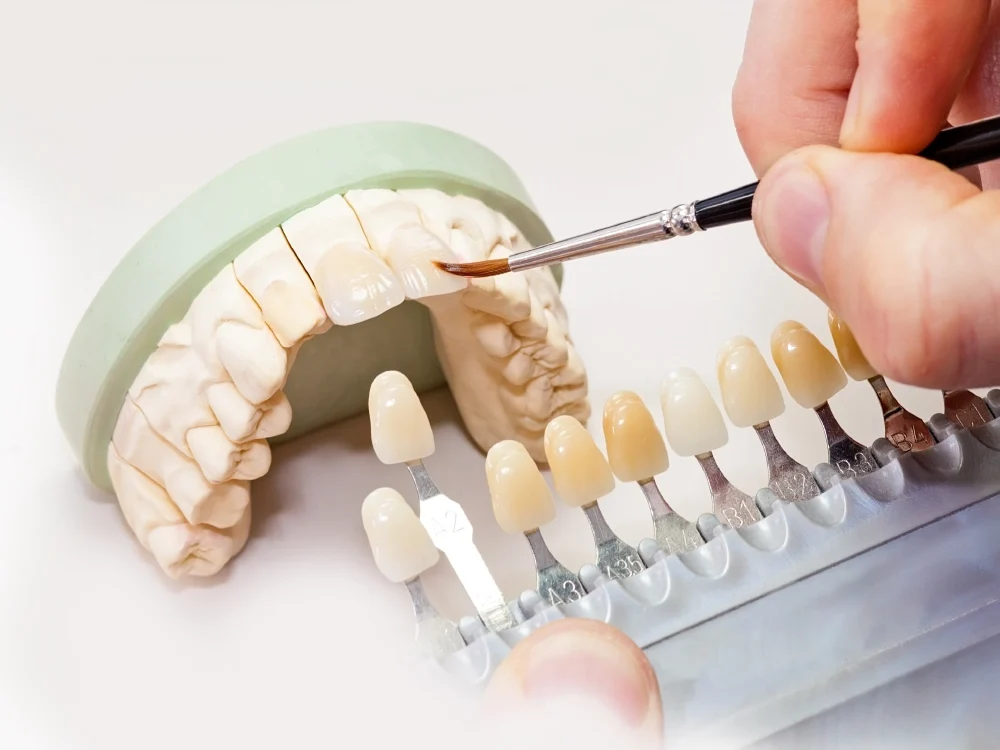
First, dental stain glaze is a specialized vitreous paste for dental laboratory use only. It combines fine ceramic pigments and glass glaze components. Unlike consumer tooth care products, technicians apply it on fabricated crowns, bridges, veneers, and zirconia restorations.
In addition, low-temperature dental stain glaze for lab finishing features stable firing properties. It bonds firmly to all-ceramic and metal-ceramic surfaces. It delivers natural enamel luster and customized tooth characterization for final restoration finishing.
Core Functions for Dental Technicians
First, it delivers precise shade customization. Technicians use the glaze to correct minor shade deviations. It matches adjacent natural teeth and fixes uniform, artificial color tones on prosthetics.
Second, it creates realistic surface textures. The stain glaze adds natural incisal transparency, cervical depth, and subtle enamel marks. It makes dental restorations look authentic instead of flat and machine-made.
Third, it forms a durable protective glaze layer. It seals micro-pores on ceramic surfaces. It improves wear resistance and prevents external stain penetration for long-term restoration stability.
Finally, it enhances surface smoothness and gloss. It replaces rough post-firing textures with a polished, enamel-like finish. It optimizes restoration biocompatibility and oral comfort.
Common Lab Applications
Technicians primarily use this product for multiple fixed prosthodontic works. It perfectly fits custom shade stain glaze for zirconia and porcelain crown finishing.
Moreover, it works well for lithium disilicate veneers, full-arch restorations, and temporary acrylic prosthetics. It also supports gingival characterization for pink ceramic restoration detailing.
Standard Lab Application Workflow
First, clean and dry the restoration surface thoroughly. Remove all polishing residues and dust to ensure tight material bonding.
Next, mix the dental stain glaze evenly per manufacturer ratios. Apply a thin, uniform layer with professional lab brushes.
Then, conduct controlled low-temperature firing or light curing. This step fully fuses the glaze with the ceramic substrate.
Finally, inspect the shade and gloss effect. Add supplementary staining or glazing layers if you need finer aesthetic adjustments.
Professional Usage Notes for Technicians
First, dental stain glaze serves strictly for dental laboratory fabrication. It never applies to direct intraoral patient use or daily home care.
Second, strictly follow standard firing temperature parameters. Improper heat settings cause glaze cracking, color fading, or weak bonding.
Third, store the glaze in a sealed, cool environment. It prevents pigment precipitation and ingredient inactivation to guarantee stable finishing results.
Disclaimer: This article is for dental technician professional reference only. All restoration fabrication must follow official manufacturer instructions and formal dental lab operating standards.