── Dental chairside system using CAD/CAM technology

Lithium disilicate possesses excellent aesthetics and mechanical strength, making it one of the most commonly used modern ceramic materials in digital dentistry. Utilizing CAD/CAM technology, it can reduce the time required for laboratory or workshop fabrication, allowing patients to wear their dentures on the same day, thus becoming an ideal chairside denture system.

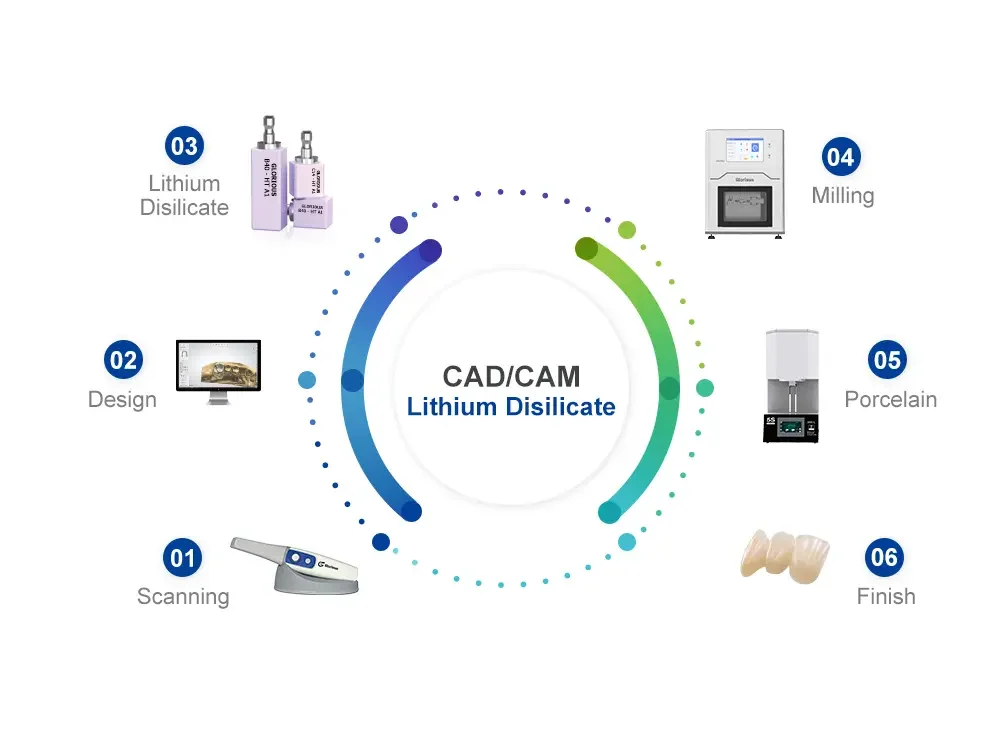
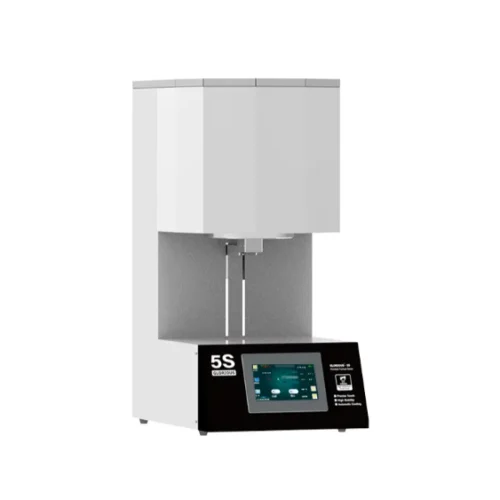
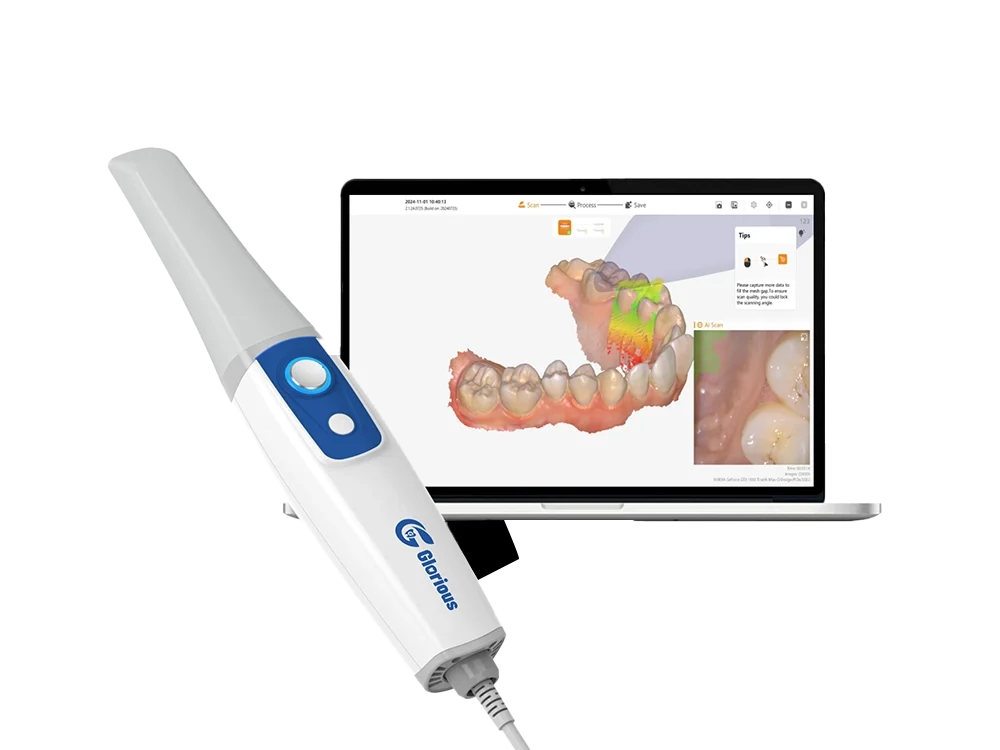
We can provide a complete CAD/CAM system: using an intraoral scanner, we accurately acquire the patient’s oral information and generate STL, OBJ, and PLY format files; we import the patient information file into EXOcad or 3Shape dental design software to set up a custom prosthesis and generate an STL file; we use hyperdent.worknc and Millbox software to generate the file; we import the file into a dental wet cutting machine to cut the lithium disilicate into the shape of the restoration; we use a ceramic furnace to fully shape the restoration; we apply enamel to the surface of the restoration, place it back into the ceramic furnace for shaping, and finally polish it to obtain the final restoration.

These solutions are widely used in crowns, veneers, inlays, high-mount inlays, and other aesthetic dental restorations.

Send Inquiry

Related products
──

View more products

Advantage

──

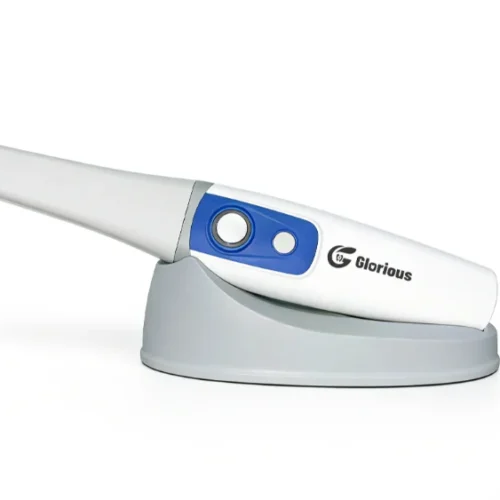
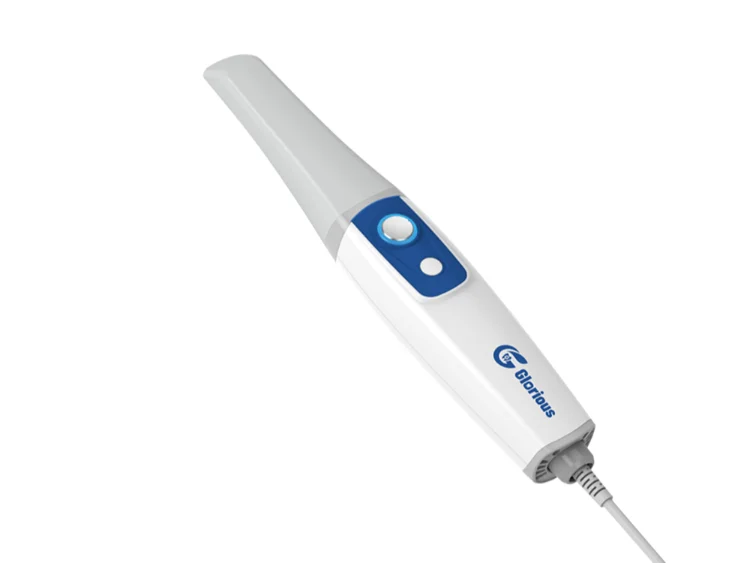
Dental Intraoral Scanner

• Data cloud platform upload 

• High precision: Scans up to a depth of 25 millimetres

• AI analyses occlusion /AI Oral Health Report Analysis

• Button control, switch between upper and lower jaw with one key

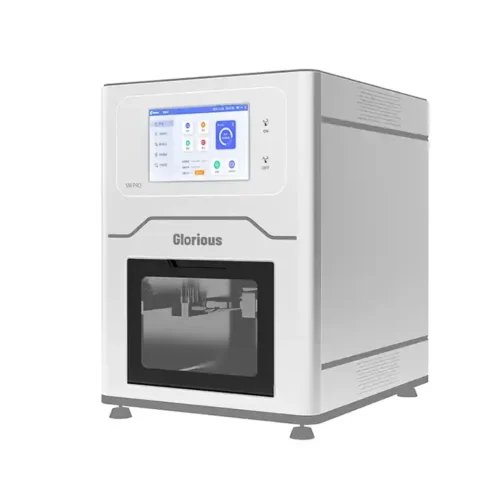
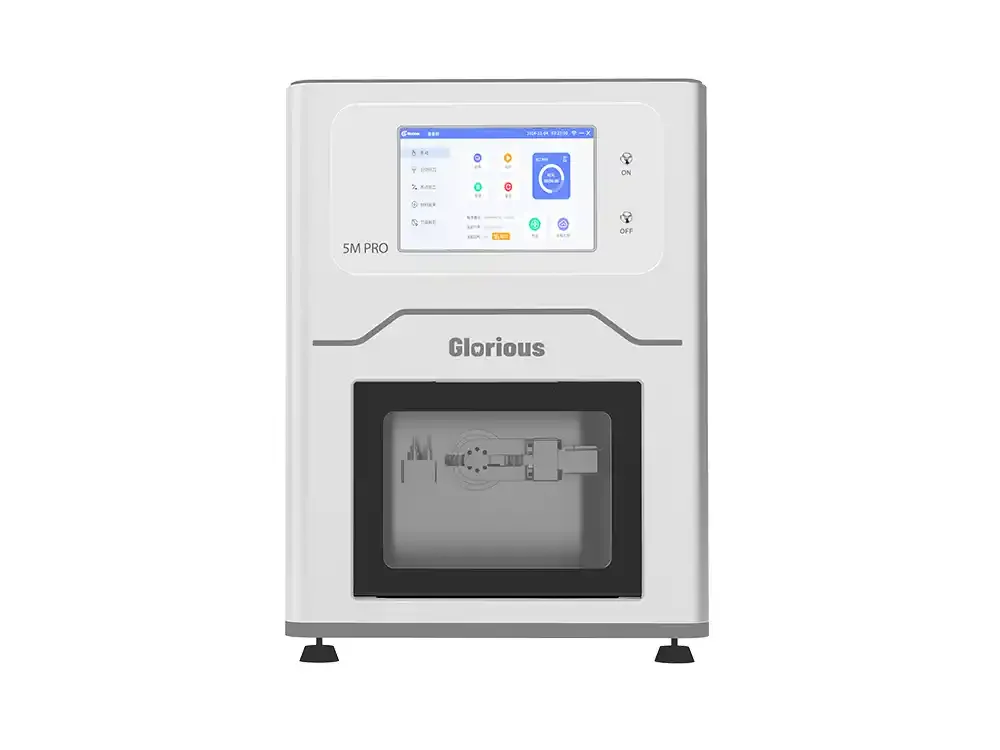
Dental Wet Milling Machine

• It supports remote control, breakpoint resuming, and intelligent detection.
 
• The fixture can hold 7 lithium disilicate pillars or 6 titanium pillars at the same time.
 
• This five-axis machine performs cutting with a machine positioning accuracy of 0.01mm.

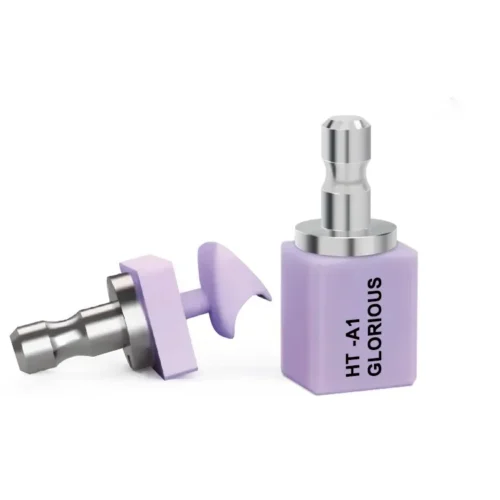
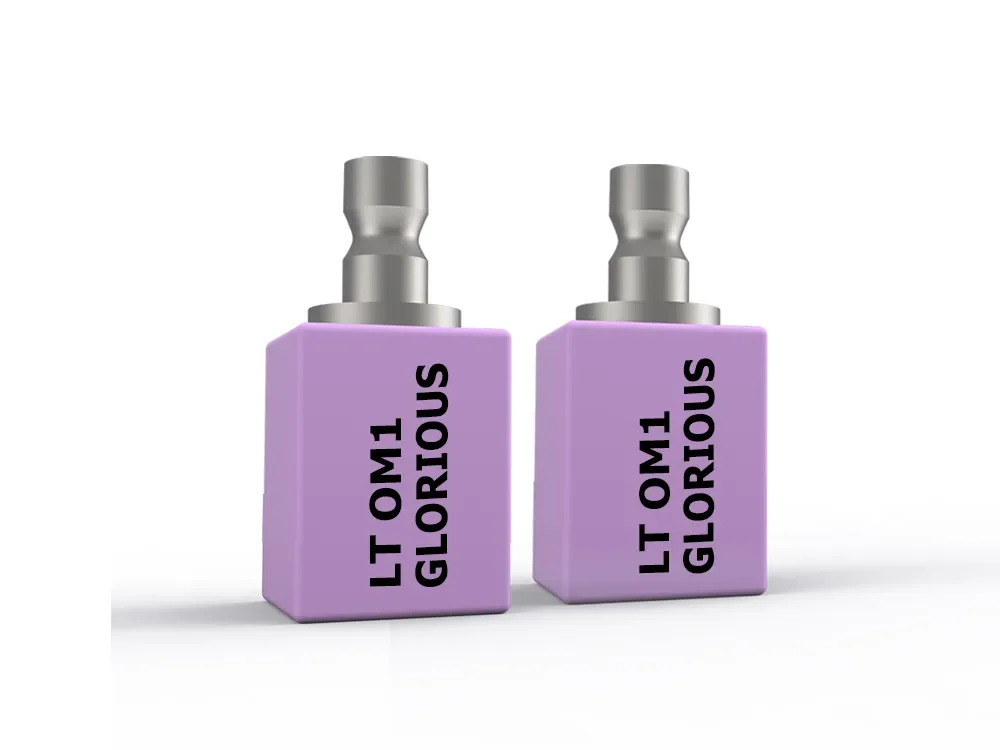
Dental Lithium disilicate

• Good biocompatibility

• Good semi-permeability and aesthetic effect

• Wear resistance is close to that of natural teeth

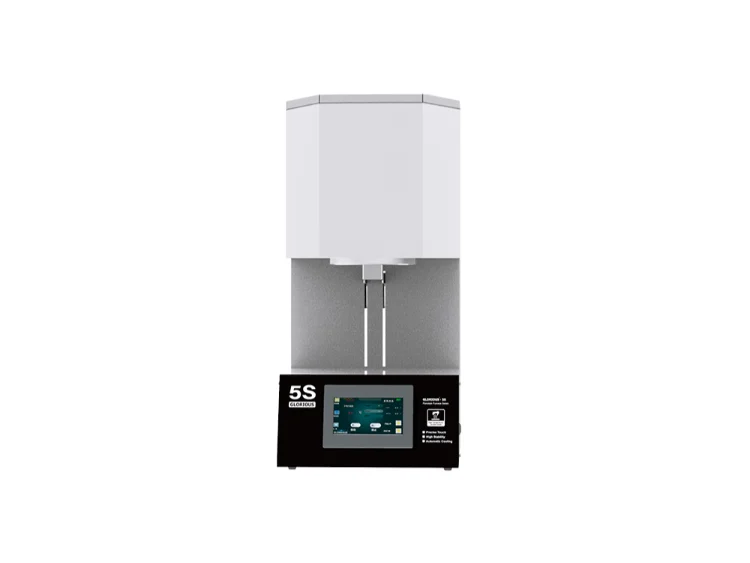
Dental Porcelain Furnace

• Intelligent temperature control

• High-precision S-type thermocouple

• 100+ sintering program storage

Workflow
──

A typical CAD / CAM zirconia restoration workflow includes the following steps:

── Need More Information?
We're here to support you.

Our team is available 24/7 to support your dental laboratory needs.

If you would like to learn more about our dental milling machines and digital dentistry solutions, feel free to contact our specialists or send us your inquiry through the contact form.

Get a Quote Contact Us

Frequently Asked Questions
──

1.Materials are fundamental and determine whether a “simulation effect” can be achieved: The material itself possesses translucency similar to natural teeth, with a gradual color change from the cervical margin to the incisal edge, resulting in a texture and smoothness that more closely resembles natural teeth.

2.The technician’s skill determines the final result. It all depends on the technician’s design of the restoration’s shape, the handling of the overall shape, the thickness of the tooth, the control of fine texture details, and the treatment of special simulation effects such as fluorosis and chalky white.

1. The color and transparency are more natural, and the effect is closer to that of real teeth.

2. Its hardness is relatively low, the roughness of the teeth is closer to that of natural teeth, and the wear and tear on the jaw and face is more severe.

3. It has good biocompatibility and is less irritating to newborns.

4. Due to its short production cycle, patients can consider wearing dentures on the same day or the next day, making it a key factor in chairside systems.

1.Glass ceramics have high light transmittance and natural, realistic colors, making them more suitable for anterior aesthetic restorations and meeting the needs of patients with high aesthetic demands.

2.It has good biocompatibility and causes little irritation to gum tissue.

3.With low strength and a bending strength of approximately 400 MPa, it is not suitable for posterior teeth with high biting forces, but is more suitable for aesthetic anterior tooth restorations.

4.The bonding technique requires a high level of skill; poor bonding may affect the bonding strength and long-term stability.